
Drowning Dreams And What Your Breathing Is Doing At 3AM

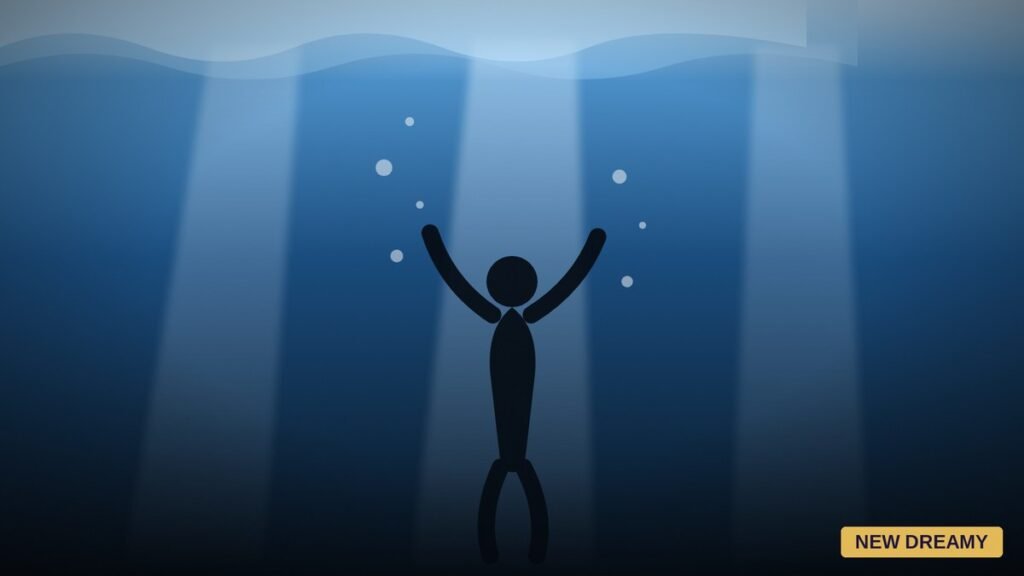
The water rises, or you are already under it, and the surface keeps moving further away. Plenty of people report being able to breathe down there. It does not help.
Water dreams are among the most physically convincing dreams there are. People wake from them gasping, sitting bolt upright, genuinely unsure for a second or two. There are two separate reasons for that, and they need to be told apart — because one of them is a metaphor and the other one is your airway.
The metaphor, first
Listen to how people describe a bad month and the vocabulary is already aquatic. Swamped. Underwater. In over my head. Drowning in work. Barely keeping afloat. Treading water. Going under.
This is not a coincidence that dreams then pick up. It is the same mapping running in both directions: the mind represents too much, not enough capacity as water, whether you are awake and writing an email or asleep and sinking.
So the most reliable waking correlate of drowning dreams is not danger. It is volume. Too many obligations, too little slack, a list longer than the hours available. People report them during exam season, in the first months of a new baby, while caring for a sick parent, and in the run-up to anything with a hard deadline.
Rising water tends to pair with a situation that is getting worse while you watch it.
Already submerged tends to pair with something you are already inside and cannot exit quickly.
Watching someone else drown is frequently reported by carers, parents and managers — responsibility for someone you cannot reach.
Calm water is a different dream entirely and usually not distressing at all.
Now the airway
Here is the part most dream articles leave out.
Breathing does not stop mattering because you are asleep. If your airway is partly obstructed, if you have a cold, if you sleep on your front with your face in a pillow, if your chest feels heavy because of reflux or anxiety or extra weight, the brain receives a stream of signals saying air is harder to get. It then does what dreaming brains do: it writes a scene that explains the sensation. Water is the obvious script.
This matters because sleep-disordered breathing is common, underdiagnosed, and treatable — and it has real consequences for heart health and daytime function. Repeated suffocation or drowning dreams are one of the symptoms worth mentioning to a doctor.
Why you can breathe underwater in some of them
A surprising number of people report discovering, mid-dream, that they can breathe perfectly well underwater — and then carrying on with the panic anyway.
That contradiction is characteristic of dreaming. The part of the brain that checks whether a fact fits is largely offline, so two incompatible things sit side by side without objection: the lungs are fine, the terror continues. It is the same machinery that lets a dream pursuer be your old teacher and a dog at once.
Interestingly, noticing the contradiction is one of the classic triggers for becoming lucid. Several people who dream regularly of water describe the breathing discovery as the moment they realised they were asleep.
What the dream is not
It is not a prediction. There is no evidence that dreaming about drowning has any relationship to actual water, and plenty of evidence that dream content tracks the dreamer’s current preoccupations rather than their future.
It is also not a verdict on how well you are coping. People in genuinely difficult stretches often have serene dreams, and people having a perfectly manageable month sometimes go under every night. The signal is loose.
What actually reduces them
- Fix the airway first. Nasal congestion, side sleeping instead of front sleeping, raising the head of the bed, and a medical check if snoring is heavy. This is the single most concrete lever.
- Alcohol earlier or not at all. It relaxes airway muscles and fragments the back half of the night, which is exactly where vivid dreams live.
- Reduce the actual load. Unglamorous, but drowning dreams usually stop when the month stops being a drowning month.
- Write the dream down and rewrite the ending. The imagery rehearsal method used for recurring nightmares works here too: a deliberately rewritten ending, rehearsed awake for a few minutes a day.
The short version
A drowning dream is two things wearing the same costume. One is a metaphor for carrying more than you can hold. The other is your body reporting on your breathing. Before you interpret it, rule out the second one — then deal with the first.
Over to you
Can you breathe in your water dreams, or not? Tell us in the comments — the split between the two kinds of dreamer is closer than you would expect.


GIPHY App Key not set. Please check settings