
Why You Can Never See Who Is Chasing You

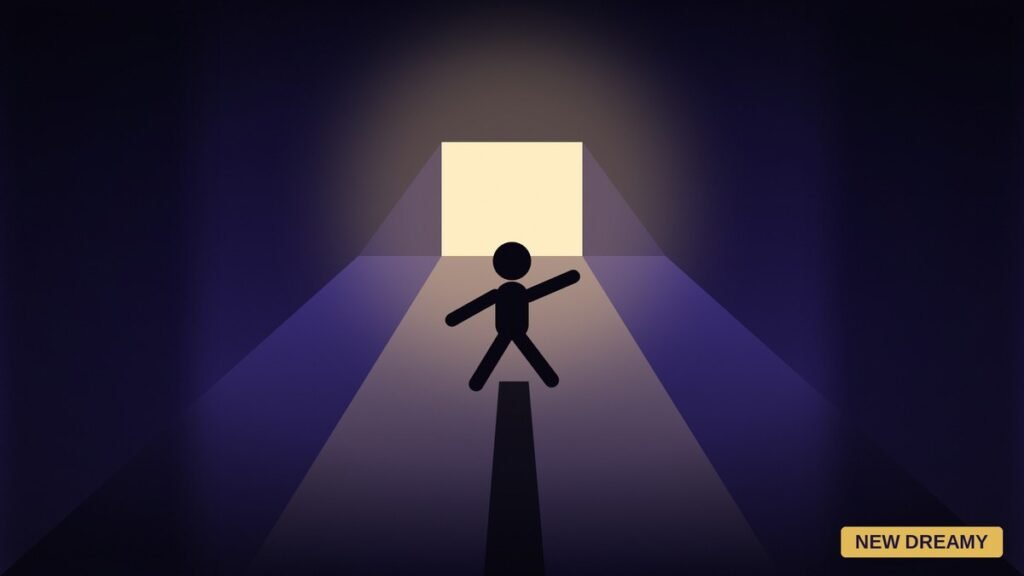
Something is behind you. You can hear it, you can feel how close it is, and you never once turn around far enough to see a face. Of every frightening dream people report, this is the one that shows up most.
Ask a room of adults whether they have been chased in a dream and nearly every hand goes up. Ask them what was chasing them and the answers collapse into vagueness: a man, a shape, an animal, “something”. The detail that should matter most is the detail the dream refuses to supply.
That is not an accident of memory. It is the most interesting thing about the dream.
The most common nightmare on earth
In studies that ask people to write down their worst dreams, chase scenarios consistently outrank falling, injury, failure and death. They start early — children report them from about age three or four, usually with an animal or a monster — and they never fully stop. The cast changes with age. Monsters become strangers, strangers become people you know, and in adulthood the pursuer often becomes nothing at all: a presence, a sound, a certainty.
The emotional signature is remarkably stable across countries and cultures. Dread, not pain. Urgency, not injury. Almost nobody reports being caught.
Why the chaser has no face
There are two readings, and they are not in conflict.
The psychological reading
A faceless pursuer is what an unnamed problem looks like. When people keep a dream diary alongside a note about their week, chase dreams cluster around things they are actively not dealing with: a conversation they keep postponing, a bill they have stopped opening, a diagnosis they have not booked the follow-up for, a relationship they already know is over.
Avoidance is the common thread. The dream borrows the structure of a threat because that is the clearest way a sleeping brain can stage the feeling of something behind me I keep not turning around to face.
The neurological reading
Dreaming happens with much of the brain’s rational, detail-checking machinery turned down. The regions that handle emotion and threat run hot; the regions that would normally fill in a specific, coherent identity run cool. A dream does not need a face to generate fear, so it does not build one. The feeling arrives first and the story is assembled around it, loosely, at speed.
This is also why dream pursuers behave strangely — appearing in two places, changing into someone else mid-chase, being your boss and a dog at the same time. The dream is not keeping track. It is keeping the feeling.
Why your legs stop working
The second universal detail: you try to run and your body will not cooperate. Thick air. Heavy legs. Pushing through water.
During REM sleep, the stage where most vivid dreaming happens, the body is in near-total muscle paralysis. The brain sends the signal to run; nothing moves; and the absence of the expected feedback is folded straight into the dream as slow-motion legs. You are, in a literal sense, trying to run with the body switched off.
That is worth knowing the next time it happens, because it removes the most humiliating part of the dream. You are not failing to escape. You are asleep.
What threat-simulation theory says it is for
One influential idea in dream research holds that dreaming evolved partly as a rehearsal system: a risk-free environment to run threat scenarios in. On that account, a chase is the cheapest possible drill — maximum emotional activation, zero physical cost. The brain practises the ancient sequence of notice, fear, flee, over and over, in a body that cannot get hurt.
The theory is debated, and it is not the only explanation on offer. But it fits two observations well: chase dreams are near-universal, and they intensify during stressful periods rather than calm ones. Stress raises the rehearsal rate.
What raises chase dreams: unresolved conflict, financial pressure, a deadline you are behind on, sleep deprivation, alcohol before bed, and the first weeks of any big change — new job, new city, new baby.
What usually lowers them: the situation resolving. Not insight about the dream, the actual situation.
When the chaser is someone you know
Occasionally the dream does supply a face, and it belongs to a real person. People find this one upsetting, and often read it as a verdict on that relationship.
Be careful here. A dream featuring someone is not evidence about that person; it is evidence about how much space they currently occupy in your head. The pursuer role tends to go to whoever represents pressure in your waking life — a demanding manager, a parent whose approval you are chasing, a partner you are avoiding a conversation with. The dream is casting, not accusing.
How to change the ending
Recurring chase nightmares respond well to a technique called imagery rehearsal, which clinicians use for nightmare disorder. The basic version is simple enough to try yourself:
- Write the dream down in daylight, in plain language, start to finish.
- Change the ending deliberately. Not into something silly — into something you would actually want. You turn around. You ask what it wants. You stop and it stops.
- Rehearse the new version for a few minutes a day, awake, eyes closed, as vividly as you can manage.
- Give it two weeks. People commonly report the dream changing, softening, or losing its grip, even when the exact new ending never appears.
Turning around is the move that does the most work. In lucid dreams — where the dreamer knows they are dreaming — people who stop and face the pursuer usually report that it shrinks, stalls, or turns out to be nothing much. The chase needs your back to continue.
The short version
The chaser has no face because it was never a who. It is the shape your mind gives to something you have been walking away from, staged in the one place where you cannot keep walking away — and your legs do not work because you are lying perfectly still.
Your turn
What chases you — and have you ever turned around in the dream? Tell us in the comments. The endings people invent are usually stranger than the chases.


GIPHY App Key not set. Please check settings