
 Harry Rapheal
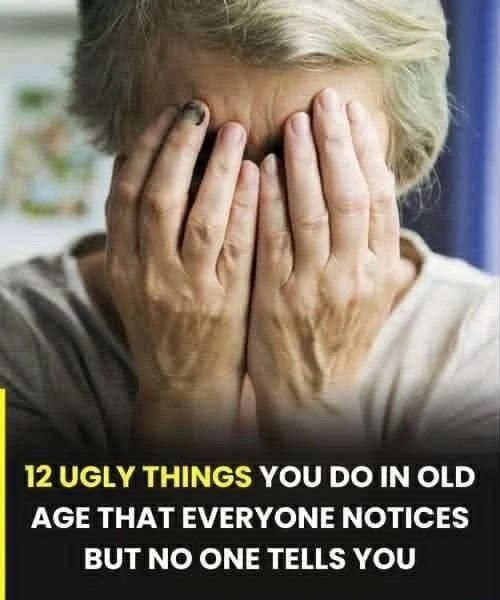
One of the few sensations that is genuinely universal is growing older. Growing older unavoidably changes our perceptions, our bodies, and—most importantly—our personalities, regardless of how we handle it. However, a hidden occurrence that frequently coexists with aging is the emergence of certain habits that may irritate friends and family.
These actions typically go unnoticed due to a societal (and frequently lovely) urge to honor our elders. Peers turn a blind eye while younger generations bite their tongues. However, these “nasty habits” aren’t always unchangeable. By recognizing them, older individuals can cultivate relationships with their loved ones that are far more meaningful and fulfilling.

1. Constant Complaining
Health challenges and life changes are real, but when every discussion turns into a “ medical report ” or a list of grievances, it becomes a heavy burden for listeners. While family members want to be compassionate, a continuous cycle of negativity can lead to “ compassion fatigue, ” causing loved bones to subconsciously part themselves just to cover their own mood.
2. Rejecting Everything New
The world moves presto, and it can be exhausting to keep up. still, a mask turndown to try new effects — whether it’s a new eatery, a piece of technology, or a social shift — can make an aged person feel unobtainable. The expression “ everything was better in my day ” is a discussion- killer that builds a wall between the history and the present.
3. Interposing exchanges
There’s a common misconception that age automatically equals a “ endless microphone ” in any room. Some seniors tend to cut others off to assert their own stories or shoes. While your life experience is vast and precious, a discussion is a two- way road. esteeming the inflow of dialogue shows that you value the other person’s voice as much as your own.
4. Offering Unrequested Guidance
It generally comes from a place of love, but giving advice when it was n’t asked for can feel like an intrusion. Whether it’s telling a grandchild how to raise their baby or a friend how to manage their plutocrat, unrequested guidance can feel patronizing. People are much more likely to hear to your wisdom when they’re the bones who seek it out.

5. Dwelling Too important on the history
Nostalgia is a important medicine. While participating history is important, living entirely in the “ glory days ” makes it hard to connect with what’s passing now. When conversations are stuck in a circle of events from thirty times agone, it can be draining for those who are trying to make a future with you in the present.
6. Ongoing Pessimism
It’s easy to come pessimistic as the world changes, but habitual pessimism is a social repellant. Constantly anticipating the worst outgrowth or assuming people have bad intentions creates a “ argentine pall ” effect. Negativity does n’t just impact the person feeling it; it’s contagious, and people naturally gravitate toward those who bring light into a room, not those who shroud it.
7. Not Truly harkening
occasionally, this is a physical issue like hail loss, which is fully accessible. But other times, it’s a lack of focus. seesawing off, looking distracted, or staying for your turn to speak rather of harkening can hurt the passions of those trying to partake their lives with you. Engagement is the currency of a good relationship.Romance
8. Censuring youngish Generations
Every generation thinks the one following them is “ going to the tykes . ” imprinting youngish people as lazy, entitled, or reckless simply because their life differs from yours creates an “ us vs. them ” intelligence. Every period has its own challenges; showing curiosity about the ultramodern world rather of judgment goes a long way.

9. Neglecting tone- Care
There’s a dangerous myth that once you reach a certain age, your appearance or hygiene no longer matters. Neglecting introductory tone- care is n’t just a particular choice; it affects those around you. Maintaining your health and donation shows that you still admire yourself and watch about the comfort of those in your immediate circle.
10. Using Age as a defense for Poor Conduct
Being an “ elder ” is n’t a license to be rude. Some individualities use their age as a guard to say hurtful effects or bear disrespectfully, awaiting others to just “ take it ” because of the age gap. Genuine respect is earned through kindness and character, anyhow of how numerous candles are on the birthday cutlet.
11. Telling the Same Tales constantly
We all have our favorite stories, but when “ Story A ” has been told for the tenth time in a week, it becomes a test of tolerance for the listener. While memory setbacks are a natural part of aging, trying to stay aware of what you’ve formerly participated keeps your exchanges fresh and engaging.
12. Scrupling to Embrace New Knowledge
The moment we stop learning is the moment we start decoupling. Allowing that you “ know it all ” because of your times of experience can lead to a unrestricted mind. Saying “ I’m too old for that ” is frequently just a defense medium for being hysterical to fail. Embracing new knowledge keeps the brain sharp and the spirit youthful.
Final studies
The thing of feting these habits is n’t to judge — it’s to empower. Aging does n’t have to mean getting inflexible. By staying curious, rehearsing active listening, and maintaining a positive outlook, the after times of life can be the most satisfying and connected times of all. After all, the stylish way to be admired as an elder is to be the kind of person people authentically want to be around.
Note All images used in this composition are AI- generated and intended for elucidative purposes only.


GIPHY App Key not set. Please check settings